

The ongoing joint strikes by the United States and Israel against Iran mark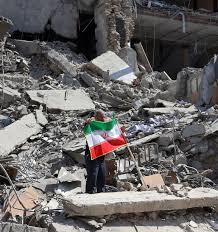 one of the most dangerous escalations in the Middle East in decades. Airstrikes have hit Tehran and other major cities, damaging infrastructure, causing power outages, and contributing to a rising civilian death toll.
Reports indicate that the war has already killed more than a thousand people in Iran and injured many more, with civilians—including women and children—among the casualties. Meanwhile, attacks on energy facilities have blanketed parts of Tehran in toxic smoke and triggered fears of environmental damage and public-health risks.
Opposition to these strikes should not be controversial. They risk igniting a regional war, destabilising the global economy, and deepening the suffering of ordinary people on all sides. But beyond the immediate humanitarian and geopolitical concerns lies another dimension that is rarely discussed: the monetary system that quietly enables perpetual war.
The Cycle of War and Debt
Modern warfare is inseparable from modern finance. Large-scale military campaigns require enormous funding, and governments almost never pay for wars directly through taxation alone. Instead, they borrow.
In the United States, military spending is frequently financed through the issuance of government bonds purchased by financial institutions and central banks. This means wars are effectively paid for with newly created credit that future taxpayers must repay. The cost is deferred, but the consequences accumulate.
Over time, this arrangement produces a structural incentive toward conflict. Wars stimulate defence spending, financial markets absorb the resulting government debt, and political leaders face fewer immediate budget constraints. The burden is shifted to future generations.
This dynamic helps explain why military interventions have become so common in the post-Cold War era. When war can be financed through debt creation rather than immediate democratic sacrifice, it becomes easier to initiate and harder to stop.
Sovereign Money: A Different Path
Advocates of sovereign money reform argue that this financial structure is fundamentally flawed. Under most modern monetary systems, commercial banks create the majority of money as interest-bearing debt when they issue loans. Governments, in turn, rely heavily on borrowing from these same financial markets to fund public spending—including wars.
A sovereign money system would work differently. In such a model, the power to create money would reside directly with the public authority rather than the banking system. New money could be issued debt-free to finance public priorities—such as infrastructure, healthcare, and climate transition—without creating an ever-expanding stock of interest-bearing government debt.
Just as importantly, sovereign money would impose greater transparency and democratic accountability on government spending. When money creation is explicit and public rather than hidden within the banking system, it becomes politically harder to funnel vast resources into destructive military campaigns.
War would no longer be quietly financed through layers of financial intermediaries and bond markets.
The Economic Cost of Escalation
The strikes on Iran have already begun to ripple through global markets. Energy prices are volatile, and Iran has threatened to disrupt regional oil flows if attacks continue.
The economic consequences will not be limited to the Middle East. Higher oil prices translate into global inflation, supply chain disruptions, and rising costs for households everywhere. Wars rarely remain geographically contained; their economic effects spread across the world.
Yet the institutions that profit from the financialisation of war—arms manufacturers, contractors, and large financial institutions—are often insulated from these broader costs.
A Choice About the Future
Opposing the US–Israeli strikes on Iran is not simply about one conflict. It is about the kind of global order we wish to build.
A world where wars can be financed indefinitely through debt and financial engineering will inevitably produce more wars. A world where money creation is democratic, transparent, and oriented toward public well-being may still face conflict—but it will no longer have a financial system structurally tilted toward militarism.
The choice is stark.
We can continue down a path where geopolitical rivalry and financial incentives combine to produce endless cycles of violence. Or we can rethink the monetary architecture that quietly underwrites those cycles.
Ending the strikes on Iran would be a necessary first step. But preventing the next war will require something deeper: reclaiming the public power of money itself.
– Walter James, CoOperativeNZ 2026
